#MOUNTINSPIREPEOPLE

Mountain Guide Hermann Opatz

HUMAN. ROLE MODEL. ICON. Mountain guide Hermann Opatz is an integral part and uniting force of alpine history in Reit im Winkl and the Kaiser Mountains. He shaped four generations of young climbers from Reit im Winkl. Since 1961, he has kept a meticulous log of each of his countless tours and can still recall the sequences of famous classics by heart. It comes as no surprise that while he never celebrated any of his birthdays, he marked his 50th climbing anniversary all the more exuberantly. An attempt to capture his spirit.
Perspective

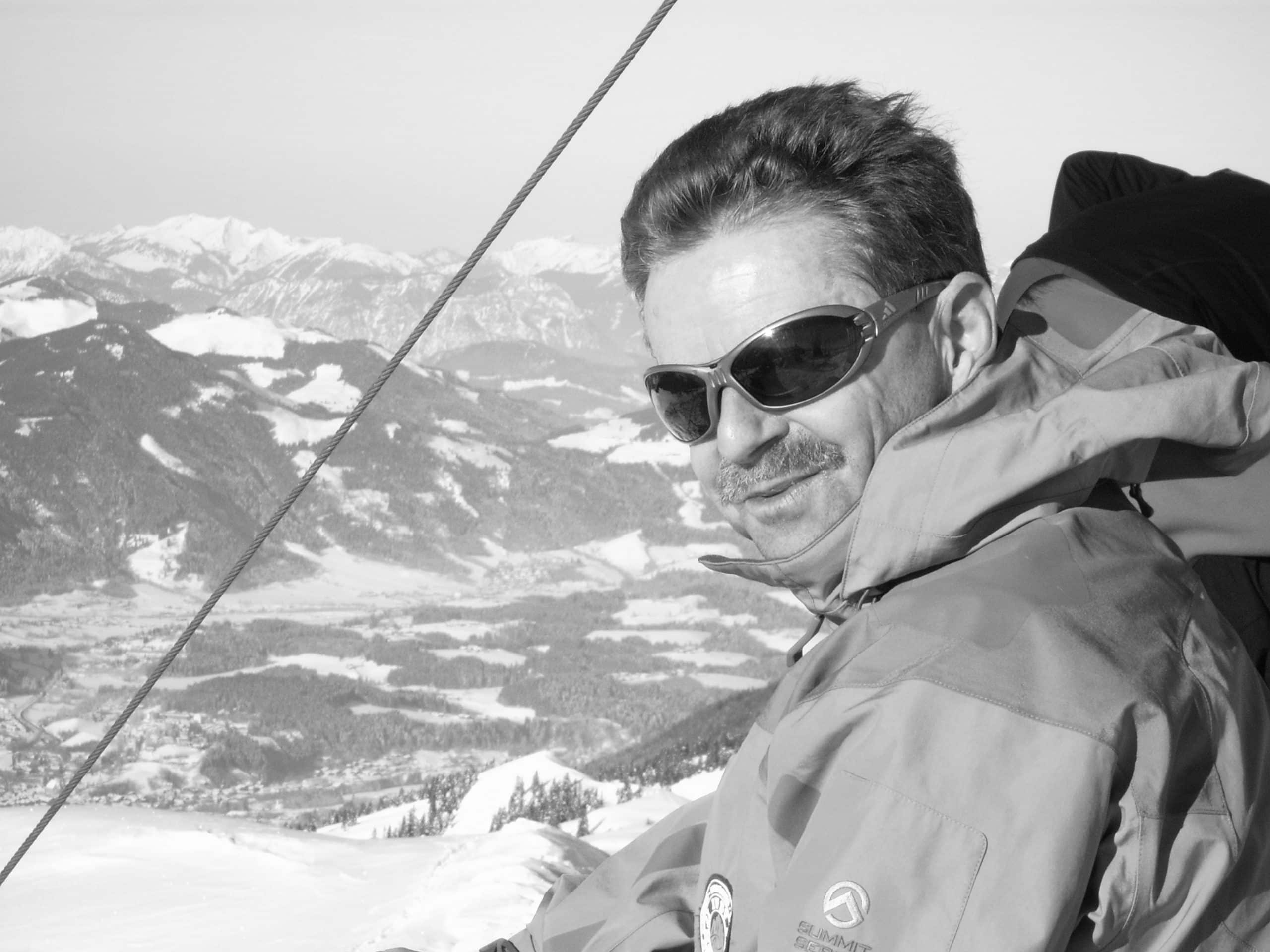
Our most recent encounter wasn’t too long ago; our paths crossed once again at the Glapfzoo Climbing Festival 2023. Even in his late 70s, he didn't miss the chance to lace up his climbing shoes and test the new crag at Liebberg. Instantly, I was transported back to my youth—Hermann the mountain guide, and me, one of his apprentices—tackling new routes and grades. With his alert eyes, flawless posture, and sharp haircut, Hermann still radiates the natural authority and alpine composure of a seasoned guide. He moves across the rock with calm, powerful strokes—the fruit of decades of dedication.

On that day, Marinus Höflinger and Florian Maier turned to me: “Hannes, if you write a portrait about us, you have to write one about Hermann too. No one has shaped climbing in Reit im Winkl as profoundly as he has.”

Naturally, they were right. I’m truly grateful to meet Hermann at his home in mid-August 2023 for an interview. We agreed on 5:00 PM, and anyone who knows Hermann knows everything should be ready at least half an hour early. Over the next three hours of our conversation, I gain rare insights into the life of an extraordinary mountaineer and a remarkable human being.

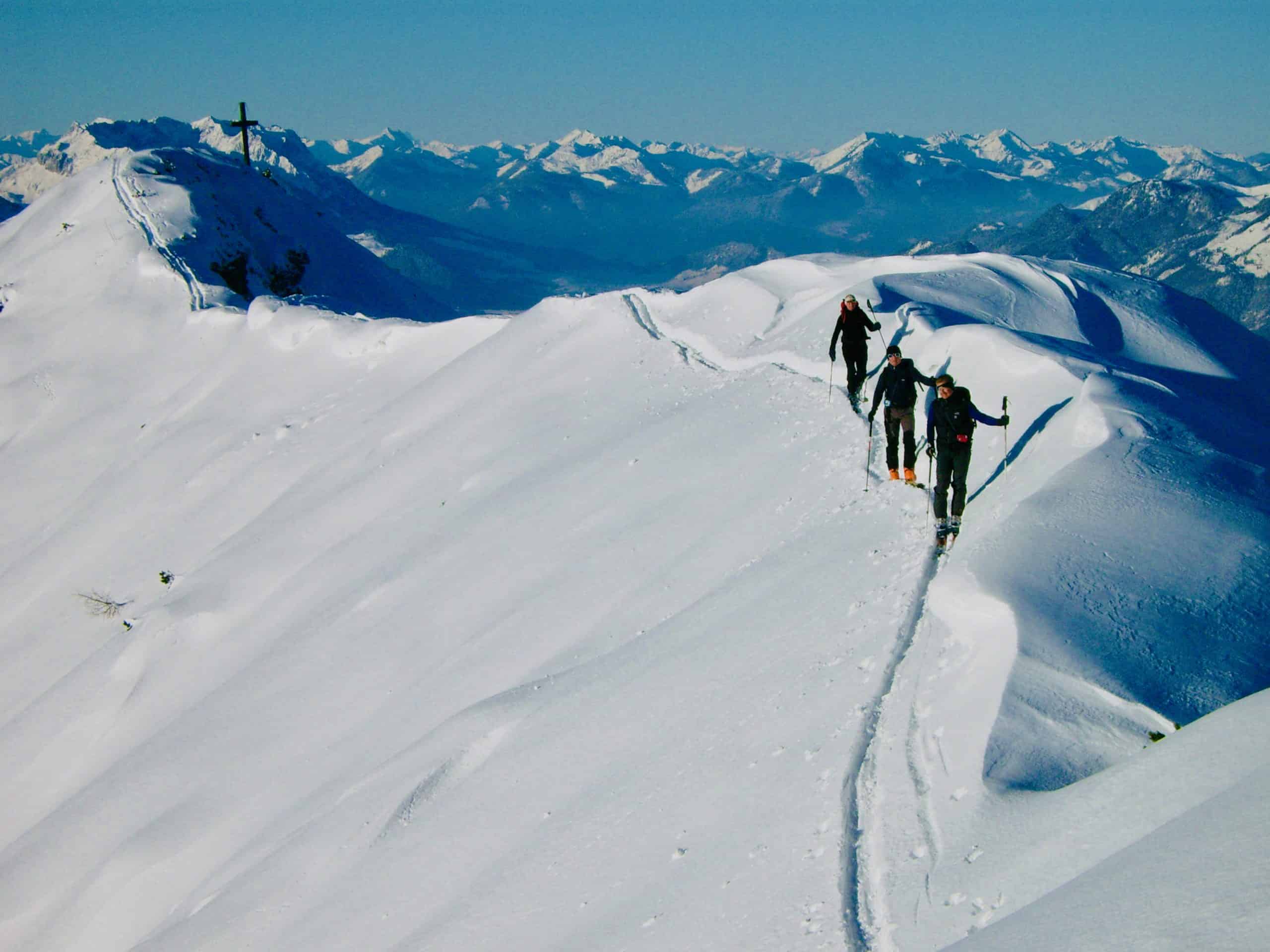
Hermann Opatz on a ski tour
Hermann Opatz ski touring in the Kitzbühel Alps

Moving Mountains

Hermann is driven—in the best sense of the word. His untamed will, paired with virtually boundless energy, defines his approach to the mountains. Yet this wasn't handed to him at birth. He only joined the Bergwacht Reit im Winkl at age 15, without any prior climbing experience. During the late heyday of aid climbing, Hermann took his first vertical steps. “Trapped” within the styles and possibilities of that era, he found true freedom. To him, climbing meant autonomy, a wild and untamed spirit, an escape from the grind of daily life. Through sheer grit and relentless determination, he carved out a new world step by step—one that would become his home for decades to come. During his military service, he completed his training as a military mountain guide, followed by the civilian mountain guide certification.
It was a steep ascent back then, and without a certain obsessive passion, graduating would have been impossible. Hermann puts it this way:

Hermann Opatz on his mountain guide training

“Traveling to the Western Alps back then was too far for me and financially out of reach. I had to prepare for the high-altitude courses of the mountain guide training entirely at home. The steep grassy slopes along the Hausbach became my training grounds. I packed my rucksack with 15 kilos of extra weight and practiced different crampon techniques on the steep slopes. That's when I realized that two short ice axes provided far better traction than the long mountaineering axe common at the time. So, while I arrived in Chamonix with zero Western Alps experience, I was physically and technically far ahead of the game.”

For two years, Hermann worked as a full-time mountain guide. His biggest challenge was likely his personal ambition, which found little room on guided tours. Time and again, he stood before breathtaking faces, below ridges and summits, unable to push higher despite prime conditions. His superior skills, honed through years of hard training, were sometimes difficult to rein in. After a freezing night in an emergency bivouac in South Tyrol and another sobering experience on the Christaturm—both triggered by overconfident guests—he decided to choose his climbing partners exclusively for himself from then on. Around the same time, the shift from aid climbing to modern alpine climbing was taking place. Together with his wife, Hermann ran a hair salon in Reit im Winkl until retirement. Sport climbing in Klobenstein on Saturdays, alpine tours in the Kaiser Mountains on Sundays, and relentless training sessions throughout the week. Mountains were—and remain—fixed stars, places of longing, and open sanctuaries within a tightly scheduled life. The pull-up bar mounted in the doorway between the salon and the apartment completes the picture.

Selective Elegance - A New Way of Climbing

Stepping away from artificial aids like ladders and etriers, along with the rise of alpine style in high-altitude mountaineering, marked the last great revolution in the sport. Old habits fell away, sparking passionate debates between opposing philosophies. Within a few short years, the identity and self-image of an entire climbing generation transformed. Climbing in its purest form became the ultimate benchmark, requiring a whole new technical skill set. Rock was no longer conquered with brute force, but read with the fingertips. Pumped-up arms gave way to grip strength and agility. What sounds like a sharp contrast was, in truth, a fluid transition. Embracing lighter gear and modern materials simply opened new horizons.

Sparse bolt and piton distances had always been the hallmark of the Wilder Kaiser. But from that point on, these gaps had to be crossed purely on lead, climbing free. A near-catastrophe during this era became a pivotal chapter in Hermann’s climbing life:

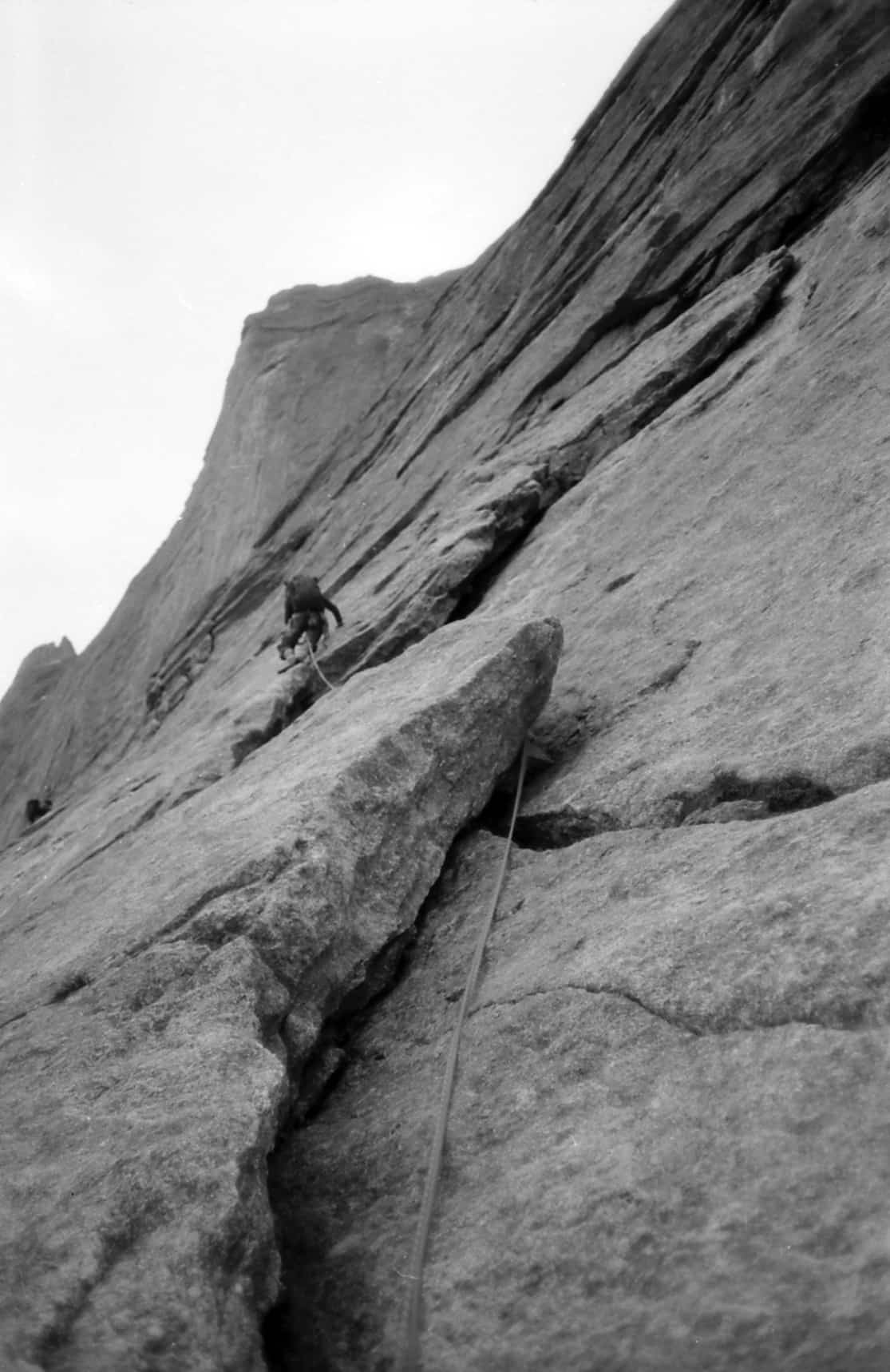
Hermann Opatz climbing in the Wilder Kaiser
Cassin route on Piz Badile, one of the five classic North Faces

“We were on the Kleine Halt in the Wilder Kaiser, unaware that the first ascensionist of the route was capable of free climbing grade VII. The crux of the route lay just before the second belay station above a long crack. At the hardest section, I took a fall while leading. I fell more than 35 meters down the wall. Only a single extra piton we had placed at the lower belay prevented a fatal rope-team disaster.”

Fate?

Across decades in the mountains, almost every mountaineer’s journey includes days that could have taken a dark turn.

Was it pure luck that Hermann placed that second piton at the anchor? Was it due to his guide training, which shaped his approach to safety? Or was it raw instinct that guided his hand?

Perhaps it was a mix of circumstances; our decisions are so often shaped by unseen forces. What remains certain is that every tour that followed was directly or indirectly influenced by that near-miss.

Climbing Partners - Functional Bonds in an Emotional Realm

Over the years, Hermann’s climbing partners changed. Some companions from the early days hung up their gear, scaled back, or chose not to dedicate so much time to training. In their place came new faces: young, ambitious climbers seeking the wisdom of this versatile master for fresh adventures. In turn, Hermann found himself heading out with the young guns on routes pushing the cutting edge of technical difficulty. Bringing the youth along proved a shared gift. Countless first repeats of alpine classics in the Kaiser Mountains, the Berchtesgaden Alps, on the Steinplatte, and the Loferer Alm fill his journals. Through these journeys, Hermann taught generations from Reit im Winkl how to climb. A vital contribution to the next generation of the Bergwacht, the Alpine Club, and HG Klobenstein. That quiet legacy is shining bright today. The active local climbing community is currently reviving forgotten crags from the early days of climbing in Reit im Winkl. Along the way, they uncover old pitons and clear lines that Hermann trained on more than 50 years ago. Where climbers once used ladders to conquer the imposing overhang in the Klausenbach Gorge, today it is climbed completely free. Every generation creates its own path and rules. Rope teams always carry both a functional and an emotional bond. Functionally, they are safety units built on mutual support. Emotionally, they share the raw truth of every experience—both the triumphs and the trials. Hermann never hesitated to take younger mountaineers along and mentor them in alpine climbing. Backed by the serenity of decades of experience, he reads the strengths and limits of his companions effortlessly. A gift that has blessed him and his partners with unforgettable mountain memories.

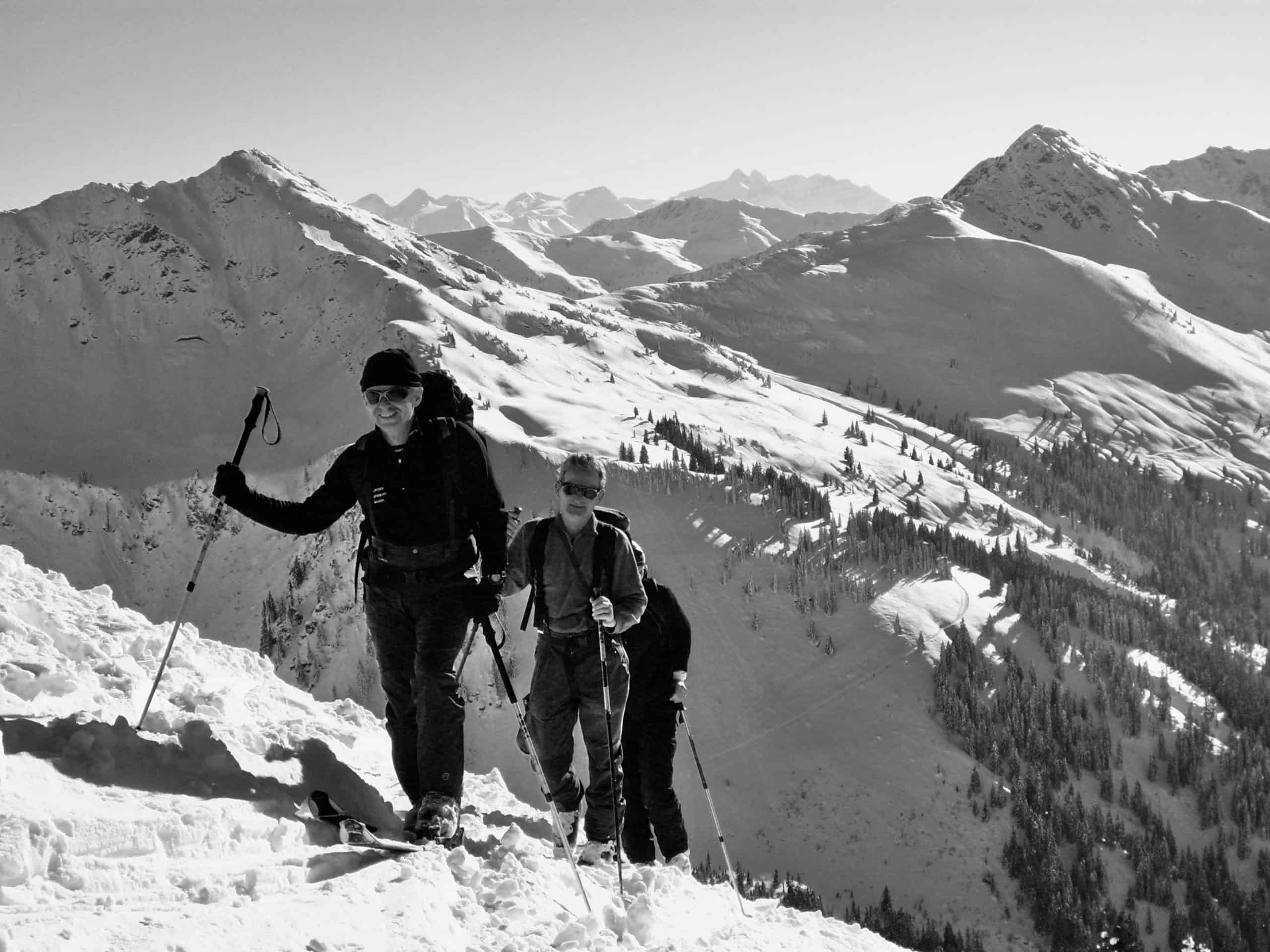
Hermann Opatz ski touring in the Chiemgau Alps
Hermann Opatz on a ski tour on the Dürrnbachhorn

Winter and summer alike, he ventured into territories near and far. On ski tours, too, Hermann remains the ultimate mountain companion, always with an eye for great snow. Unsurprisingly, preparation for the upcoming winter started like clockwork as autumn approached: mountain runs, stair intervals, road bike tours, and focused fitness routines ensured he kicked off the season in peak form. Naturally, countless vertical meters leave their mark, and a few injuries never fully healed. Yet seeing Hermann at 78 still climbing with pure joy and sharing excitement for the younger generation is deeply inspiring. Once a mountain guide, always a mountain guide—even when choosing your own rope partners. On the Hausbachfall via ferrata, Hermann has logged over 500 ascents. An enduring fire keeps his body moving and his heart in the high country. Yet what Hermann finds among the peaks runs even deeper—it is home, wherever the mountain stands.

Hermann Opatz on a ski tour

Dear Hermann, thank you so much for sharing your story!

#mountinspirepeople

Photo credit: Josef Heigenhauser